Decluttering
Under-Sink Organisation That Survives a Leak
How do I organise the cupboard under the sink?
Line the base with a tray or vinyl offcut first, because it will get wet at some point. Then cull the products down to about five, use two narrow containers either side of the pipe rather than one wide one, add a U-shaped shelf to straddle it, and hang spray bottles from a tension rod.
The cupboard under the sink is the worst-designed storage in most houses. A pipe through the middle, an uneven floor, no light, and a real chance of water at some point.
Most organising advice treats it as a normal cupboard with a normal grid of containers. It is not, and that is why those setups look good for a fortnight and then collapse back into a heap of half-used bottles.
Assume it will get wet
Not pessimism, planning. Waste traps drip, seals perish, and the first sign is usually a smell or a swollen cupboard base rather than visible water.
That assumption changes what you put down there:
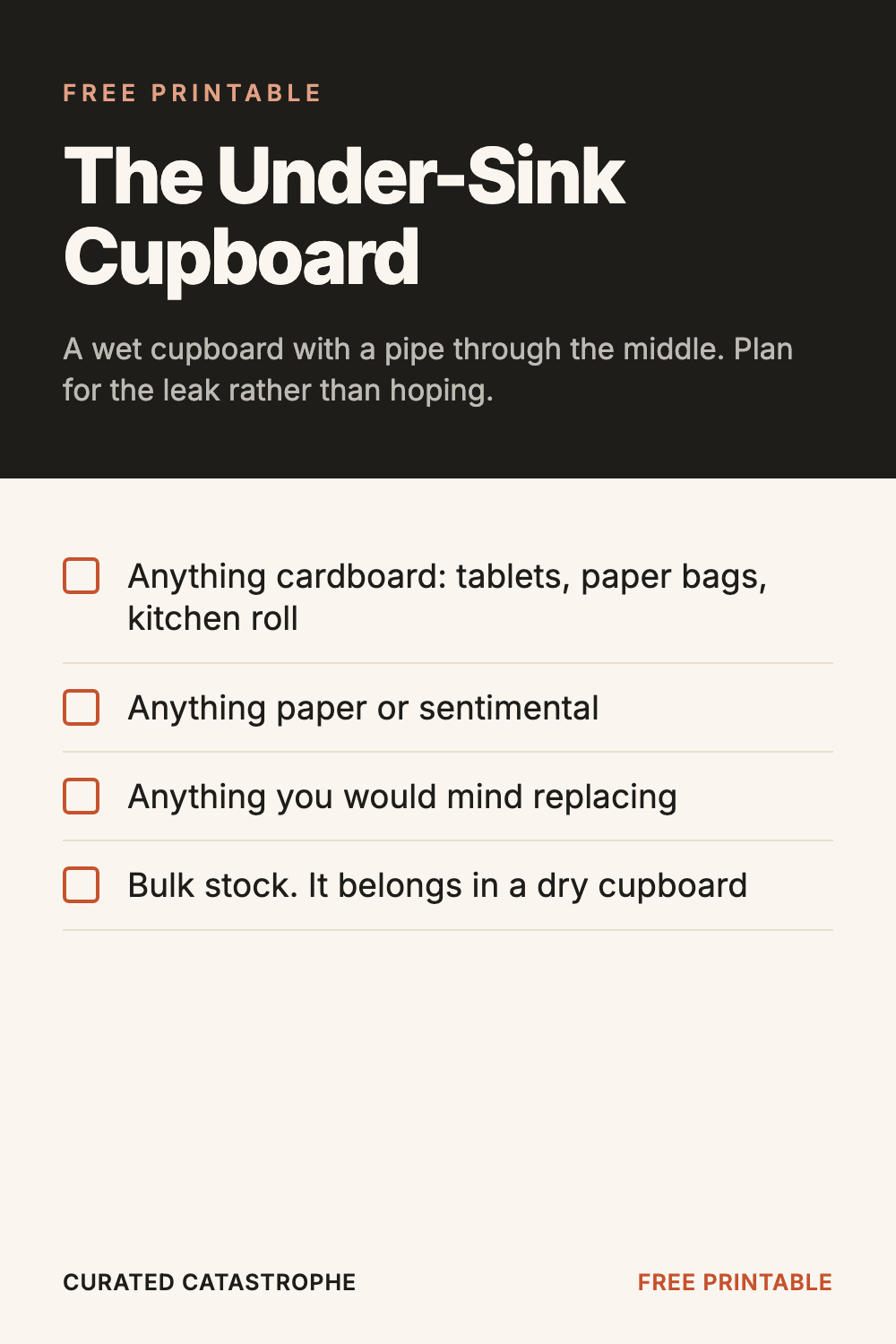
- Nothing cardboard. Boxes of dishwasher tablets, paper bags, spare kitchen roll. All of it ruined by a slow drip nobody noticed
- Nothing you would not want to replace
- Nothing sentimental or paper, ever
- Everything in plastic or wire, not fabric or card
Line the base
The single most useful thing you can do, and it takes ten minutes.
A cheap plastic tray, an offcut of vinyl, or a purpose-made under-sink liner across the whole base. It contains a small leak, it makes the cupboard wipeable, and it means a drip shows up as water sitting in a tray rather than as a rotted cupboard floor discovered two years later.
If you do nothing else on this page, do this.
Cull first, and be ruthless
Under-sink cupboards accumulate cleaning products faster than anywhere else in a house, because they are bought in a hurry and half-used.
Take everything out and be honest:
- Combine duplicates. Two half bottles of the same thing become one
- Bin anything separated, solidified or unlabelled. Cleaning products do degrade
- Be honest about the specialist ones. The oven cleaner used once in three years, the limescale product for a tap you replaced
- Most kitchens need about five products, not twenty: a general spray, a degreaser, a bleach or disinfectant, washing-up liquid, and a glass cleaner
Never mix products when combining, and never pour cleaning chemicals down the drain in quantity; most councils take them at a household waste site.
Working around the pipe
The pipe is the constraint, so design around it rather than fighting it.
- Two narrow containers either side beats one wide one that will not fit
- A U-shaped or expandable shelf that straddles the pipe roughly doubles usable height
- Tension rod across the width, with spray bottles hung by their triggers. This is the classic trick because it uses the dead space above everything else
- Over-door caddy on the inside of the cupboard door for cloths and small items
- Keep the area right under the trap clear, so a leak is visible and a plumber can reach
Zones, by frequency
Front and reachable: the things used daily. Washing-up liquid, cloths, the general spray.
Back and higher: the occasional ones. Oven cleaner, drain unblocker, the specialist products.
Not here at all: bulk stock, spare kitchen roll, anything paper. Those belong in a dry cupboard somewhere else, and moving them out is usually what creates the space.
The child lock question
If there are small children in the house this cupboard is the single highest-risk storage in it, because it combines chemicals with a low, openable door.
A magnetic child lock is cheap and invisible. The alternative that works just as well: move everything hazardous to a high cupboard and use the under-sink space for cloths, bin bags and washing-up things only.
The leak check, twice a year
Thirty seconds, attached to something else you already do.
Empty the cupboard, run the tap hard for a minute, and put a dry piece of kitchen roll under the trap and the tap tails. Any damp at all means a seal is going, and catching that early is the difference between a fifty pence washer and a new kitchen unit. It belongs on the monthly and seasonal list.
What helps
- An under-sink liner or plastic tray, the highest-return item here by a distance.
- A U-shaped shelf built to straddle the waste pipe.
- A tension rod, for hanging spray bottles in otherwise dead space.
- A caddy you can lift out whole, so cleaning the cupboard takes one movement.
- Magnetic child locks, if relevant, which fit without visible hardware.
What actually helps
- An under-sink liner or tray
The highest-return item here by a distance.
- A U-shaped under-sink shelf
Built to straddle the waste pipe rather than fight it.
- A tension rod
Spray bottles hung by the trigger, in otherwise dead space.
- Magnetic child locks
Invisible, and this is the highest-risk cupboard in a house with toddlers.
Common questions
How do I organise the cupboard under the sink?
Line the base with a tray or vinyl offcut first, because it will get wet at some point. Then cull the products down to about five, use two narrow containers either side of the pipe rather than one wide one, add a U-shaped shelf to straddle it, and hang spray bottles from a tension rod.
What should you not store under the sink?
Anything cardboard, because a slow drip ruins it before anyone notices. Nothing paper or sentimental, nothing you would mind replacing, and no bulk stock. Keep the area directly under the trap clear so a leak is visible and a plumber can reach it.
How do I check for a leak under the sink?
Twice a year, empty the cupboard, run the tap hard for a minute, and put dry kitchen roll under the trap and the tap tails. Any damp at all means a seal is going, and catching it early is the difference between a cheap washer and a new kitchen unit.
The Under-Sink Cupboard
A wet cupboard with a pipe through the middle. Plan for the leak rather than hoping.
Download the free PDFSave this for later
Rather not decide?
Should I keep this? answers it for one object in four questions.
Keep reading
- Decluttering
Laundry Room Organisation When It Is Actually a Cupboard
No laundry room, just a machine in a cupboard or under a worktop. Storage that works in the space around it.
- Decluttering
The Junk Drawer, Properly Sorted
Twenty minutes, and the honest observation that most of what is in there belongs in a bin rather than in a divider.
- Decluttering
Kitchen Organization for Kitchens That Are Too Small
How to organise a small kitchen around how you actually cook, including the zone method and the appliances worth losing.