Cleaning schedules
Cleaning Routines for Homes With Pets
How do I keep a house clean with pets?
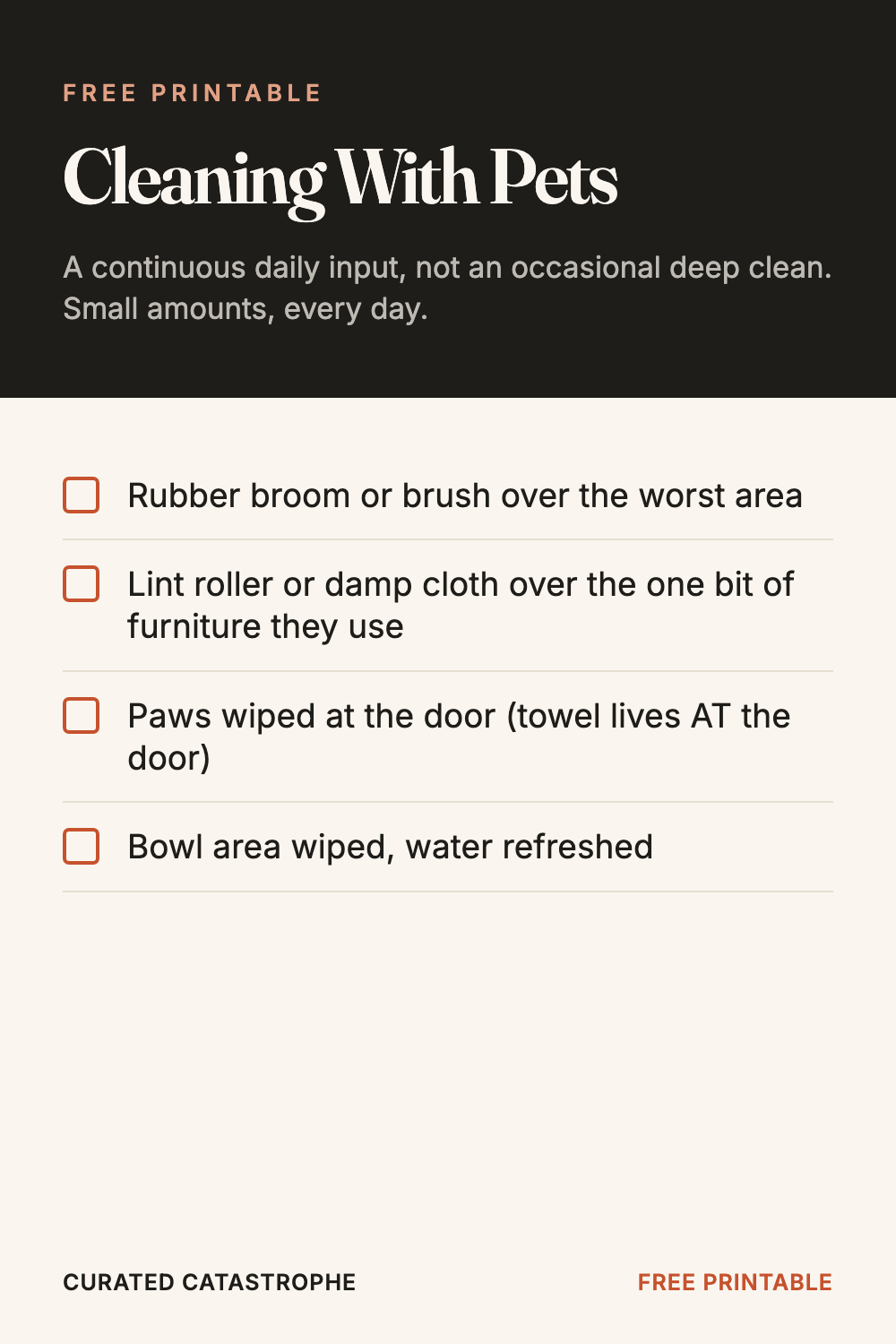
Treat it as a daily input rather than an occasional deep clean. Two minutes a day: a rubber broom over the worst area, a lint roller on the furniture they use, paws wiped at the door, and the bowl area wiped. Skipping it converts two minutes daily into forty minutes weekly.
A house with a dog or a cat in it is not a dirty house. It is a house with a continuous, low-level input that never stops, which is a different problem and needs a different routine.
The mistake is treating pet mess as an occasional deep-clean job. It is not occasional. It arrives every day, so it has to be handled every day, in small amounts, or it accumulates faster than any weekend can fix.
The daily two minutes
Genuinely two minutes, and it is most of the battle.
- One pass with a rubber broom or a hand brush over the worst area, usually where they sleep
- Lint roller or damp cloth over the one piece of furniture they get on
- Wipe paws at the door if it is wet, which is why the towel lives at the door and not in a cupboard
- Food bowl area wiped, water bowl refreshed
Skipping this does not save two minutes. It converts two minutes daily into forty minutes weekly, and the forty minutes is a job you will resent.
Hair, honestly
You will not remove all of it, and routines built on that expectation fail. The aim is to keep it below the level where it is the first thing you notice.
What works
- Brushing the animal, which is by far the highest-return thing on this page. Five minutes outside removes hair that would otherwise take an hour to collect indoors.
- A rubber broom or squeegee on carpet, which drags out embedded hair a vacuum leaves behind
- A damp rubber glove wiped over upholstery, which beats most dedicated tools
- Washable throws on the furniture they use, swapped weekly
What does not
- Vacuuming more often without brushing more often
- Air fresheners, which cover nothing and add a second smell
- Most novelty hair-removal gadgets, which do what a damp glove does for more money
The smell you have stopped noticing
Everyone with a pet has nose-blindness to their own house. This is not a criticism, it is just how smell adaptation works, and it means you cannot audit this yourself.
Two reliable tests: come back after being away for a few days and notice the first ten seconds, or ask somebody who does not have pets to be honest.
The sources, in order of likelihood: the bedding they sleep on, soft furnishings near where they sleep, the litter tray, damp patches you do not know about, and the bowls. Washing the bedding weekly fixes most of it, and airing the house daily fixes much of the rest.
Almost every persistent pet smell in a house is a textile. If a smell survives cleaning the floor, the answer is in something soft, not something hard.
Accidents, and why they come back
The reason a pet returns to the same spot is that they can still smell it, even when you cannot.
- Blot rather than rub, always
- Use an enzymatic cleaner, not a general one. Enzymes break down the proteins; detergent just moves them and ammonia-based products smell like a reason to go there again
- Soak it properly and leave it the full time on the label, which is longer than anyone wants
- Only then wash normally
This is the one place where buying the specific product genuinely matters.
The weekly pass
On top of your normal weekly routine, not instead of it.
- Pet bedding through the machine on a hot wash
- Vacuum properly, including where they sleep, and empty the vacuum afterwards
- Wipe skirting boards and door frames at their height, which is where the marks actually are
- Wash the bowls in hot soapy water, not just a rinse
- Litter tray fully emptied and washed, not just scooped
The door, which is the whole problem
Most pet dirt is walked in, so the highest-leverage change is not cleaning at all, it is what happens in the first metre of the house.
A proper mat inside and out, a towel on a hook at the actual door, and a hard floor rather than carpet in that first metre if you ever get the choice. This is the pet version of the entryway problem, and it is worth solving once.
What helps
- A rubber broom, which is the single most useful pet-cleaning object there is.
- An enzymatic cleaner, for accidents. Nothing else works properly.
- Washable throws for the furniture they use, in two sets so one is always clean.
- A grooming brush that suits the coat, used outside, which prevents more than it cleans.
- A vacuum with a decent filter, since pet homes benefit from filtration more than suction.
What actually helps
- A rubber broom
The single most useful pet-cleaning object there is.
- An enzymatic cleaner
For accidents. Nothing else actually works.
- Washable throws, two sets
So one is always clean while the other is in the machine.
- A grooming brush for the coat
Used outside. Prevents far more than it cleans.
Common questions
How do I keep a house clean with pets?
Treat it as a daily input rather than an occasional deep clean. Two minutes a day: a rubber broom over the worst area, a lint roller on the furniture they use, paws wiped at the door, and the bowl area wiped. Skipping it converts two minutes daily into forty minutes weekly.
What is the best way to get pet hair off carpet and furniture?
A rubber broom or squeegee drags embedded hair out of carpet that a vacuum leaves behind, and a damp rubber glove beats most dedicated tools on upholstery. Brushing the animal outside for five minutes prevents more hair than any amount of vacuuming removes.
How do I get rid of pet smell in the house?
It is almost always a textile. If a smell survives cleaning the floor, look at pet bedding, soft furnishings near where they sleep, and the litter tray. For accidents use an enzymatic cleaner, because detergent only moves the proteins and ammonia-based products invite a repeat visit.
Cleaning With Pets
A continuous daily input, not an occasional deep clean. Small amounts, every day.
Download the free PDFSave this for later
Rather not decide?
Build your cleaning schedule and get a routine sized to your actual household.
Keep reading
- Cleaning schedules
The Autumn Cleaning Checklist: The Jobs to Do Before Winter
The jobs that are far easier now than in December, and the handful that genuinely cost money if you skip them.
- Cleaning schedules
Cleaning With a Newborn: The Absolute Minimum That Still Works
The short list of what genuinely has to happen, and explicit permission to ignore everything else for a few months.
- Cleaning schedules
The Realistic Weekly Cleaning Schedule (For People With Jobs)
A weekly cleaning routine built around about 20 minutes a day, designed to be kept rather than admired. Free printable included.