Cleaning schedules
The Bedroom Cleaning Checklist (And the Bits Everyone Skips)
What order should you clean a bedroom in?
Strip the bed first so the dust settles, then clear surfaces, then dust top to bottom, then vacuum, then air the room. Doing floors before dusting means doing them twice.
Bedrooms get the least cleaning attention of any room in the house, because nobody visits them and the mess is easy to shut a door on. They are also the room you spend the most consecutive hours in, which makes that a slightly odd trade.
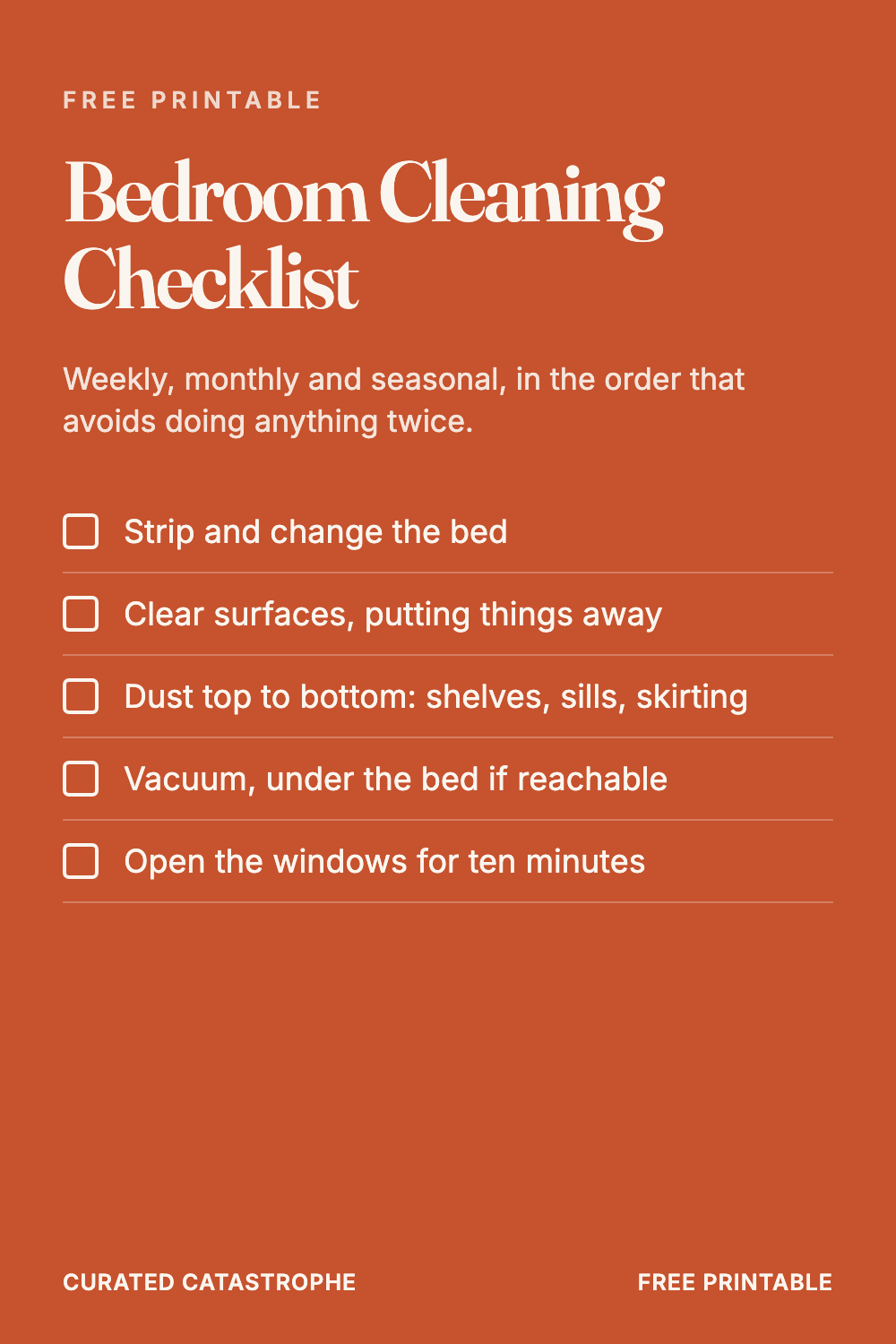
This is the full list, in the order that avoids doing anything twice.
Weekly (about 15 minutes)
- Strip and change the bed. Do this first, so the dust you disturb settles before you vacuum.
- Clear surfaces, putting things away rather than moving them around.
- Dust, working top to bottom: shelves, then sills, then skirting.
- Vacuum, including under the bed if it is reachable without moving furniture.
- Open the windows for ten minutes, even in winter. Especially in winter.
Monthly
- Vacuum the mattress, then rotate it. Flip it too, if it is a type that flips.
- Wash pillow protectors and any mattress protector.
- Wipe down the wardrobe doors and handles.
- Clean the mirrors properly.
- Move the bed and vacuum underneath, which is where the majority of household dust lives.
Seasonal
- Wash the duvet and the pillows themselves. Pillows should be washed two or three times a year and replaced every couple of years. Almost nobody does either.
- Wash the curtains, which hold an impressive amount of dust.
- Clean the light fitting and lampshade.
- Swap seasonal clothing and take the opportunity to remove anything you did not wear at all last season.
The bits everyone skips
These four are the difference between a bedroom that is clean and a bedroom that feels clean.
- Under the bed. Not glamorous, genuinely the biggest dust reservoir in the room.
- The tops of wardrobes. Out of sight, and the dust falls on you every time a door opens.
- The headboard, particularly fabric ones, which need vacuuming like upholstery.
- Behind the bedside tables, where cables and dust form something regrettable.
The sleep angle
A few of these jobs have a genuine, measurable effect rather than a purely aesthetic one:
- Washing bedding weekly matters more than people think if anyone in the house has allergies or asthma. Dust mites are the main culprit and heat is what kills them, so wash hot.
- Airing the room daily reduces the humidity that mould and mites both need. Ten minutes with the window open, every morning, does more than any spray.
- Pillows lose their support long before they look worn. Fold one in half; if it does not spring back, it is done.
What helps
- Two full sets of bedding per bed, minimum. The reason beds go unchanged is that stripping one commits you to remaking it immediately. With a spare set it is a two-minute job.
- Zipped mattress and pillow protectors, which are the actual barrier against mites and are far easier to wash than the things they protect.
- A handheld vacuum kept upstairs for mattresses and headboards, so the job does not require hauling the main vacuum around.
- A dehumidifier if you have persistent condensation on the windows, which is a sign the room is damper than it should be and will eventually mean mould on the sills.
If the room is currently a disaster
Do not start with this list. Start with the rubbish bag and the laundry pile from the overwhelmed method, get the floor visible, and come back to this next week.
A checklist applied to a room you cannot walk across is just a list of things to feel bad about.
What actually helps
- Two full sets of bedding per bed
The reason beds go unchanged is that stripping one commits you to remaking it.
- Zipped mattress and pillow protectors
The actual barrier against dust mites, and far easier to wash than what they protect.
- A handheld vacuum kept upstairs
For mattresses and headboards without hauling the main vacuum around.
Common questions
What order should you clean a bedroom in?
Strip the bed first so the dust settles, then clear surfaces, then dust top to bottom, then vacuum, then air the room. Doing floors before dusting means doing them twice.
How often should you wash pillows and duvets?
The pillows and duvet themselves, not just the covers, two or three times a year. Pillows should be replaced every couple of years; fold one in half and if it does not spring back it is done.
What gets missed most when cleaning a bedroom?
Under the bed, the tops of wardrobes, the headboard, and behind the bedside tables. Under the bed is the biggest dust reservoir in the room.
Bedroom Cleaning Checklist
Weekly, monthly and seasonal, in the order that avoids doing anything twice.
Download the free PDFSave this for later
Rather not decide?
Build your cleaning schedule and get a routine sized to your actual household.
Keep reading
- Cleaning schedules
The Autumn Cleaning Checklist: The Jobs to Do Before Winter
The jobs that are far easier now than in December, and the handful that genuinely cost money if you skip them.
- Cleaning schedules
The Deep Cleaning Checklist, Room by Room (Printable)
A room-by-room deep cleaning checklist split into 45-minute sessions, so you can do it over a fortnight instead of losing an entire weekend.
- Cleaning schedules
How to Start Cleaning When the Mess Is Overwhelming
A practical method for starting when the house has got badly out of hand and you cannot face any of it. No pep talk, just an order of operations.