Meal planning
What to Keep In for the Night Nothing Is Planned
What should I keep in the cupboard for emergency dinners?
Pasta in two shapes, rice and quick noodles; chopped tomatoes, chickpeas, coconut milk, tinned fish and sweetcorn; garlic, onions, stock, soy sauce, one curry paste and hard cheese; and in the freezer, peas, sliced bread and something you cooked double of.
Every household has the night nothing was planned. Somebody was late, the shop did not happen, the thing you meant to defrost is still solid.
That night is not a failure of organisation. It is normal, it happens most weeks, and the only question is whether the cupboard is set up to absorb it.
One shelf, treated differently
Pick a shelf. What lives on it is not general shopping, it is the emergency dinner shelf, and the rule is that anything taken from it goes on the list immediately.
That single rule is what separates a working emergency shelf from a cupboard that used to have things in it.
The list
Short on purpose. A long list is a cupboard you cannot see into, which is the problem this is supposed to solve.
The starches
- Dried pasta, two shapes
- Rice
- Noodles, the quick kind
The tins
- Chopped tomatoes, more than you think
- Chickpeas and one other pulse
- Coconut milk
- Tuna or another tinned fish
- Sweetcorn, which children will eat when they will not eat anything else
The flavour
- Garlic, and onions that are not going soft
- Stock cubes
- Soy sauce
- One curry paste
- Hard cheese, which keeps for weeks
The freezer half
- Peas
- Bread, sliced, which toasts from frozen
- One bag of something you cooked double of
What each turns into
The point of the list is not the items, it is that each one is one step from a meal.
- Tomatoes plus pasta plus garlic. Fifteen minutes and universally accepted.
- Coconut milk plus a curry paste plus chickpeas over rice. Twenty minutes, no fresh anything.
- Stock plus noodles plus peas plus an egg. Ten minutes, and better than it sounds.
- Tuna, sweetcorn and pasta, hot or cold, which is the one children request.
- Cheese on toast, done properly, under a grill with something sharp alongside. It is dinner.
An emergency shelf is not about nutrition, it is about removing the moment where somebody opens a cupboard, sees nothing obvious, and picks up a phone.
Restock on a rule, not on noticing
Check it once a fortnight, attached to something already happening: the shop, the bins, whatever is regular.
The check takes about thirty seconds because the list is short. If it takes longer than that, the shelf has too much on it and the useful part has been buried, which is the same problem the pantry inventory solves at a larger scale.
The thing that ruins it
Eating the emergency shelf on a normal night.
It is not precious, and using it is fine, but it has to be replaced. A shelf that quietly emptied over six weeks is worse than no shelf at all, because you were relying on it without checking.
What helps
- A tin rack or step shelf, so the back row is visible and the oldest tin is reachable.
- Airtight jars for the two pasta shapes, which is mostly about seeing the level at a glance.
- A magnetic list pad on the cupboard door, so a taken item goes on the list in the same motion.
- Bouillon paste rather than cubes, which keeps for months in the fridge and tastes better.
What actually helps
- A tin rack or step shelf
The back row becomes visible, so the oldest tin is the one you reach.
- Airtight jars
Mostly so you can see the level at a glance.
- A magnetic list pad
A taken item goes on the list in the same motion.
- Bouillon paste
Keeps for months in the fridge and tastes better than cubes.
Common questions
What should I keep in the cupboard for emergency dinners?
Pasta in two shapes, rice and quick noodles; chopped tomatoes, chickpeas, coconut milk, tinned fish and sweetcorn; garlic, onions, stock, soy sauce, one curry paste and hard cheese; and in the freezer, peas, sliced bread and something you cooked double of.
How do I stop unplanned nights becoming takeaway?
Keep one shelf that is only for this, with one rule: anything taken from it goes on the shopping list immediately. The takeaway moment is somebody opening a cupboard, seeing nothing obvious and picking up a phone, so the shelf has to be visibly stocked.
What can I cook with only store cupboard ingredients?
Tomatoes, pasta and garlic in fifteen minutes. Coconut milk, curry paste and chickpeas over rice in twenty. Stock, noodles, peas and an egg in ten. Tuna, sweetcorn and pasta. Or cheese on toast done properly, which is a real dinner.
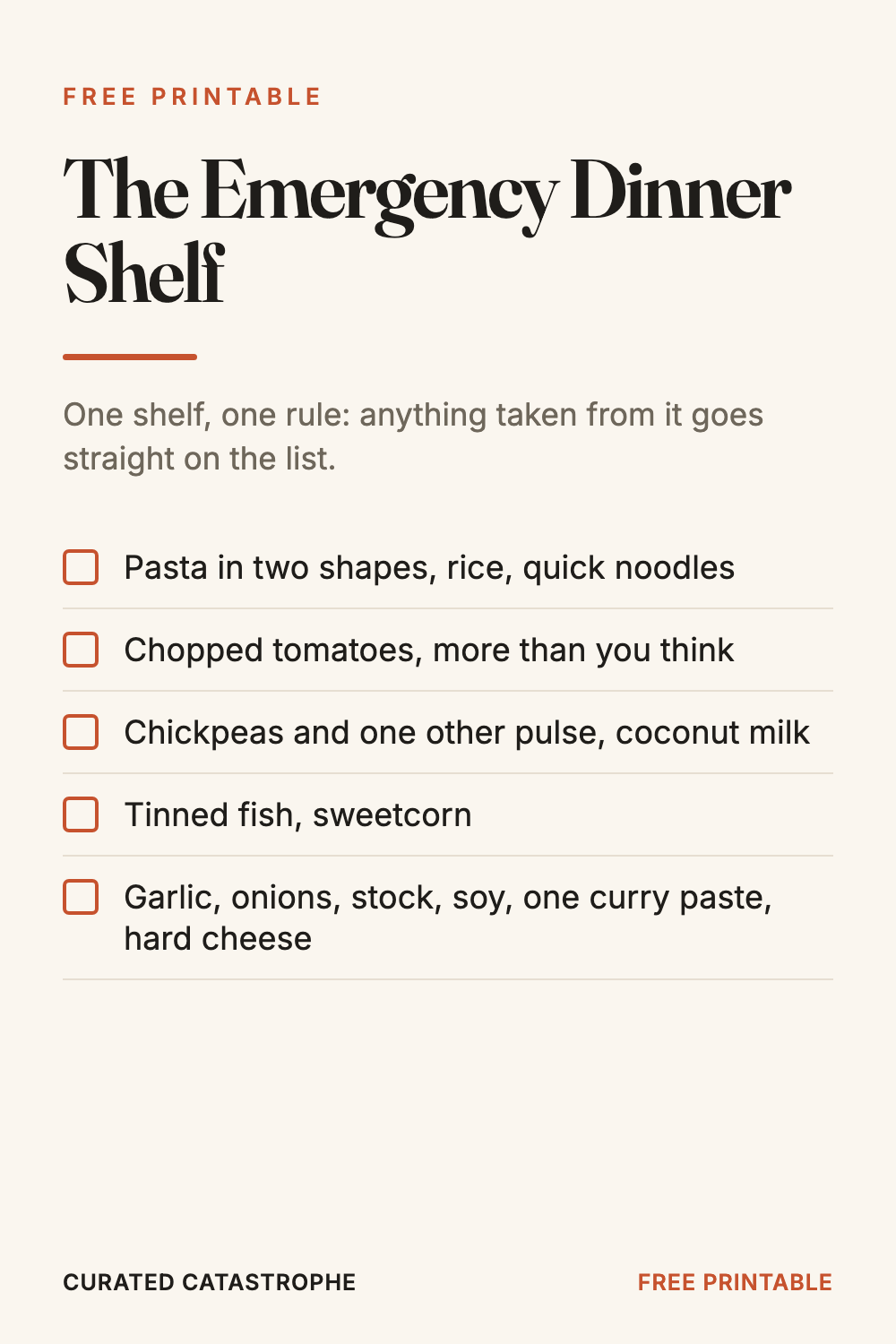
The Emergency Dinner Shelf
One shelf, one rule: anything taken from it goes straight on the list.
Download the free PDFSave this for later
Rather not decide?
What's for dinner? names the kind of dinner tonight is, at half past five.
Keep reading
- Meal planning
The Grocery List That Matches How You Actually Shop
Sorted by where things are in the shop, not by when you thought of them, which is why you stop doubling back.
- Meal planning
Batch Cooking Without a Chest Freezer
Most batch cooking advice assumes a garage and a second freezer. This assumes the drawer under your fridge.
- Meal planning
Feeding People When the Kitchen Is Out of Action
Renovation, a broken oven, or a move. Three weeks of dinners from two appliances and a sink somewhere else.